01 / 03
iOS & Android app
One codebase, both platforms
Live on the App Store & Play Store
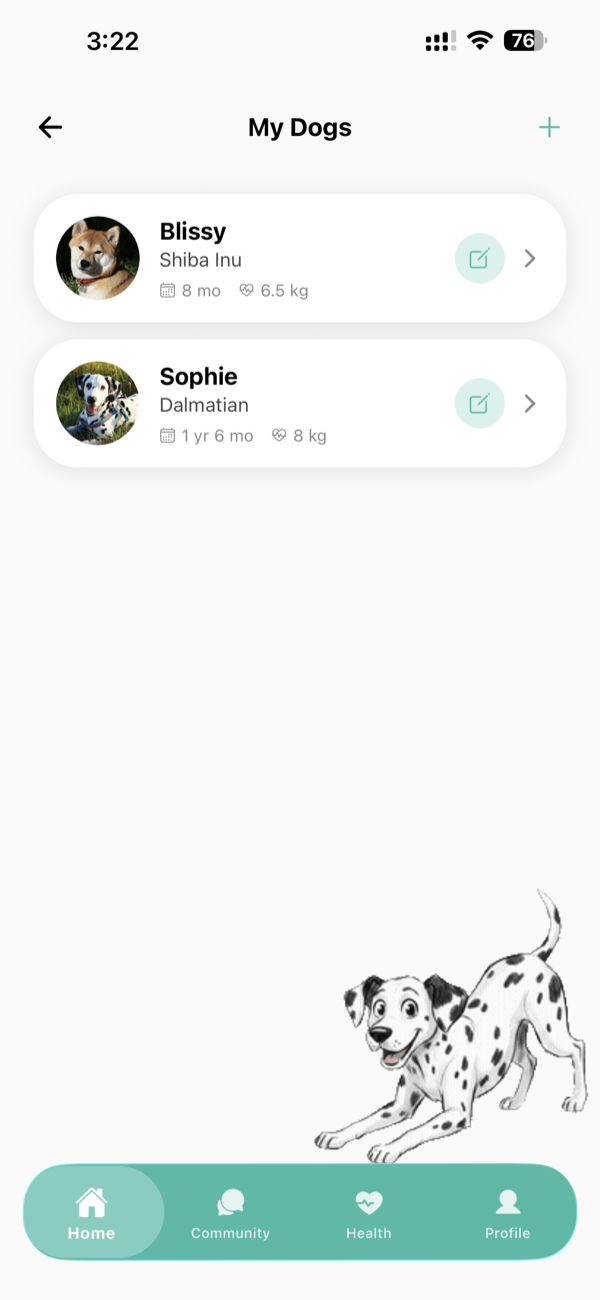
India's dog parent community. Mobile app + web + backend, built solo, AI-augmented. Live on both app stores.
One place to log meals, medications, vaccinations, mood, and behaviour. A community to ask questions. Insights that surface patterns before they become vet bills.
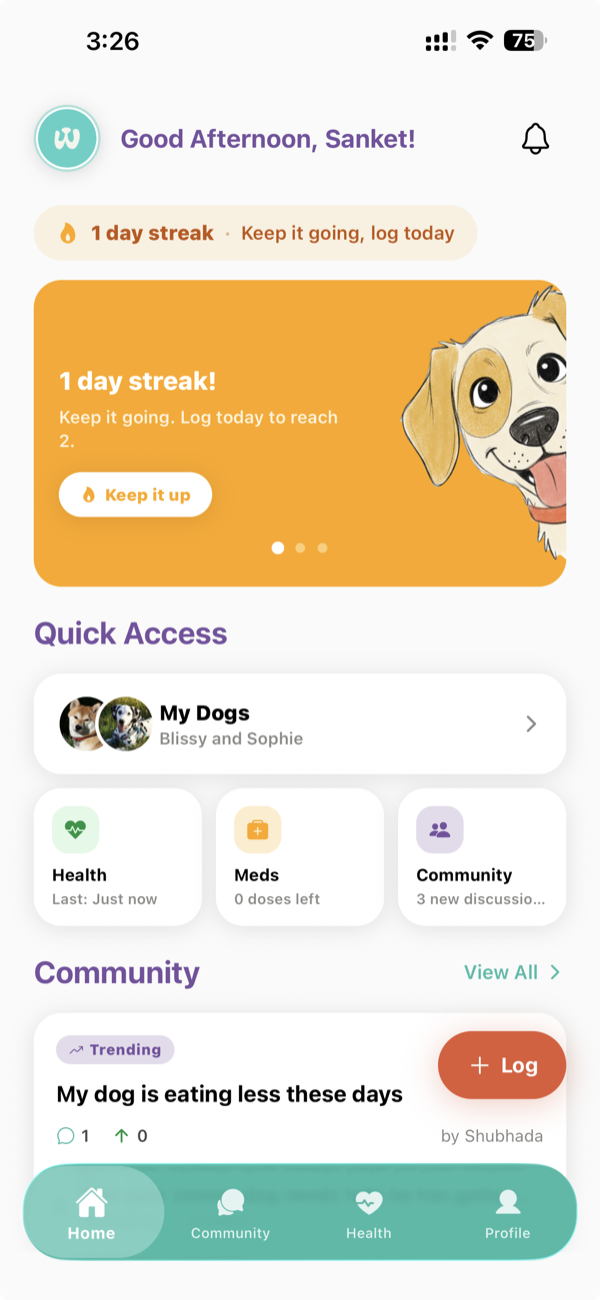
No deadline pushing for a feature, no team to keep busy, no funding to extend the runway. The scope was whatever one head could hold and ship before momentum thinned.
Most of the work was deciding what didn't need to be in v1. Subscriptions, partner portal, events, courses, AI question analysis, dark mode: deferred. The version on the app stores is the smallest one that earns the name Woofadaar. Everything else waits for users to ask for it.
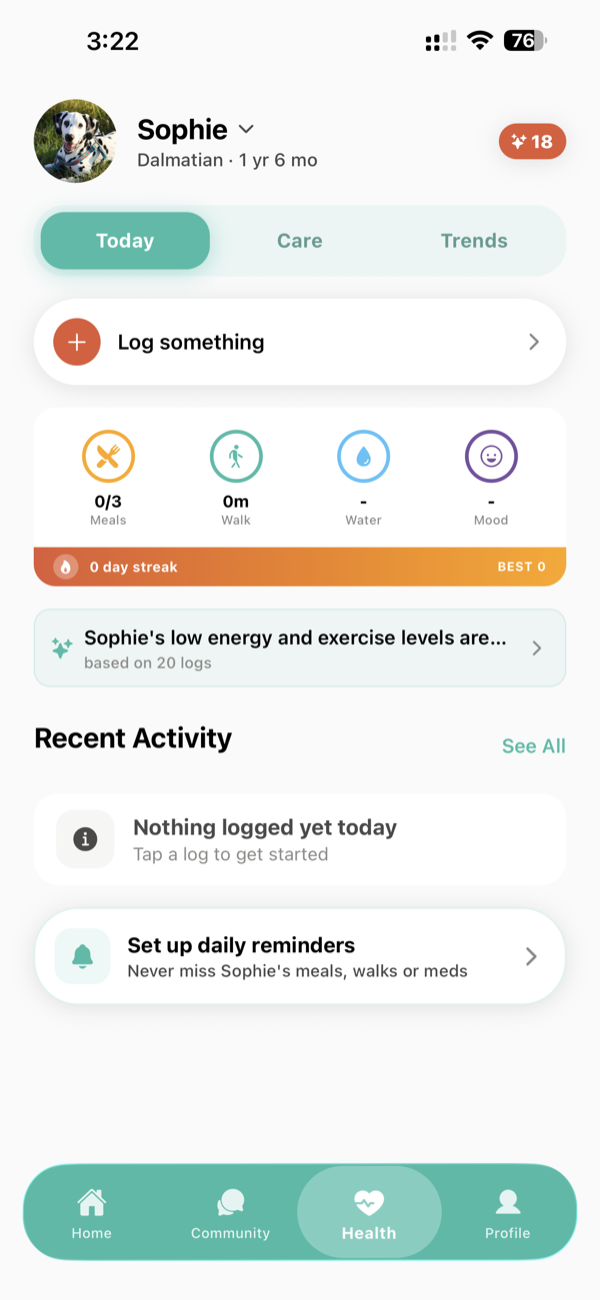
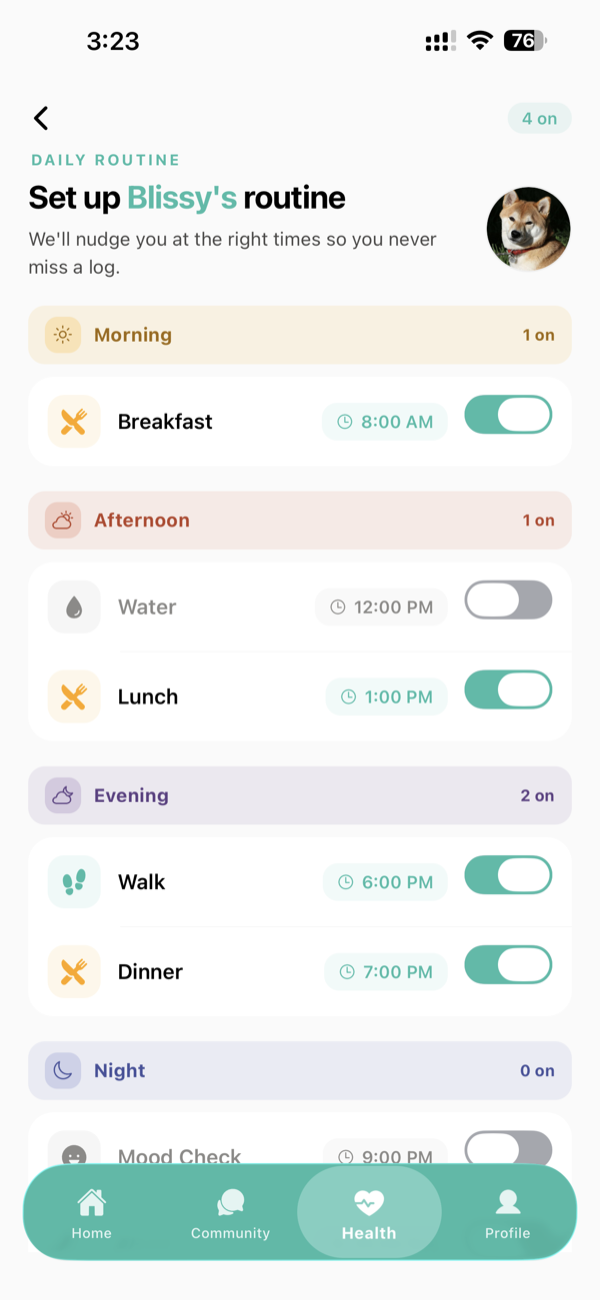
Log meals, walks, mood, medication, vaccinations in 30 seconds per entry. The app nudges before they forget.
Multi-dog families see one consolidated push instead of three confusing ones. Logout actually stops notifications (which sounds obvious until you've shipped a notification system).
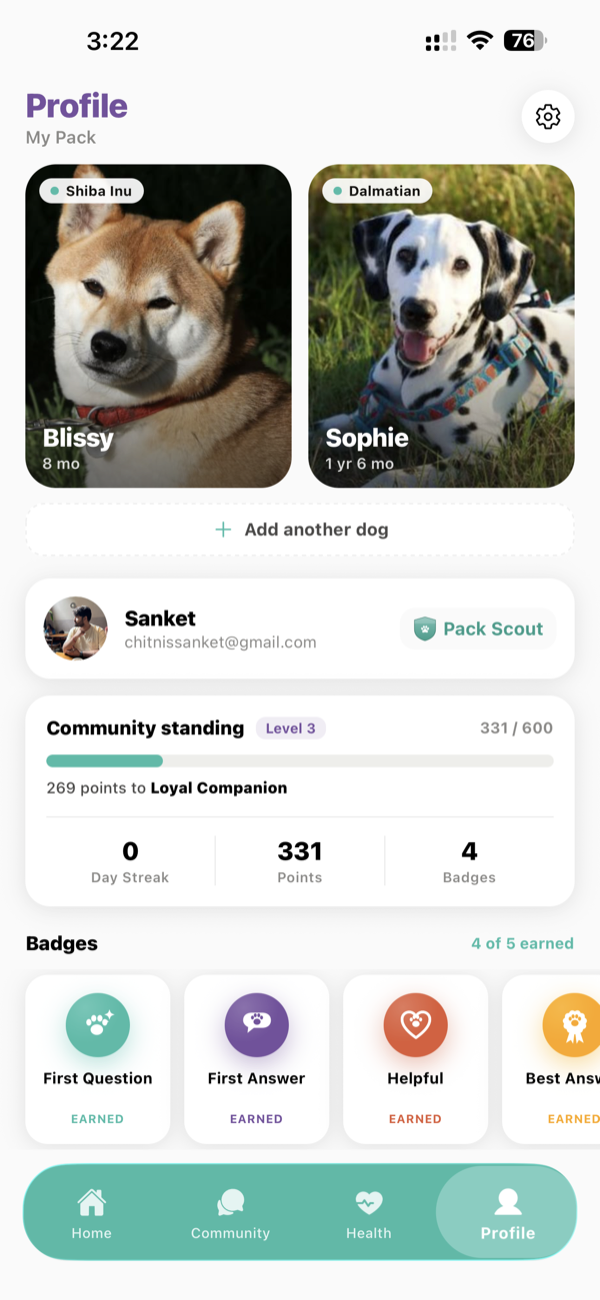
Weekly health insights spot trends a vet would otherwise miss. "Sophie's appetite has dropped four days in a row," before it becomes a vet bill.
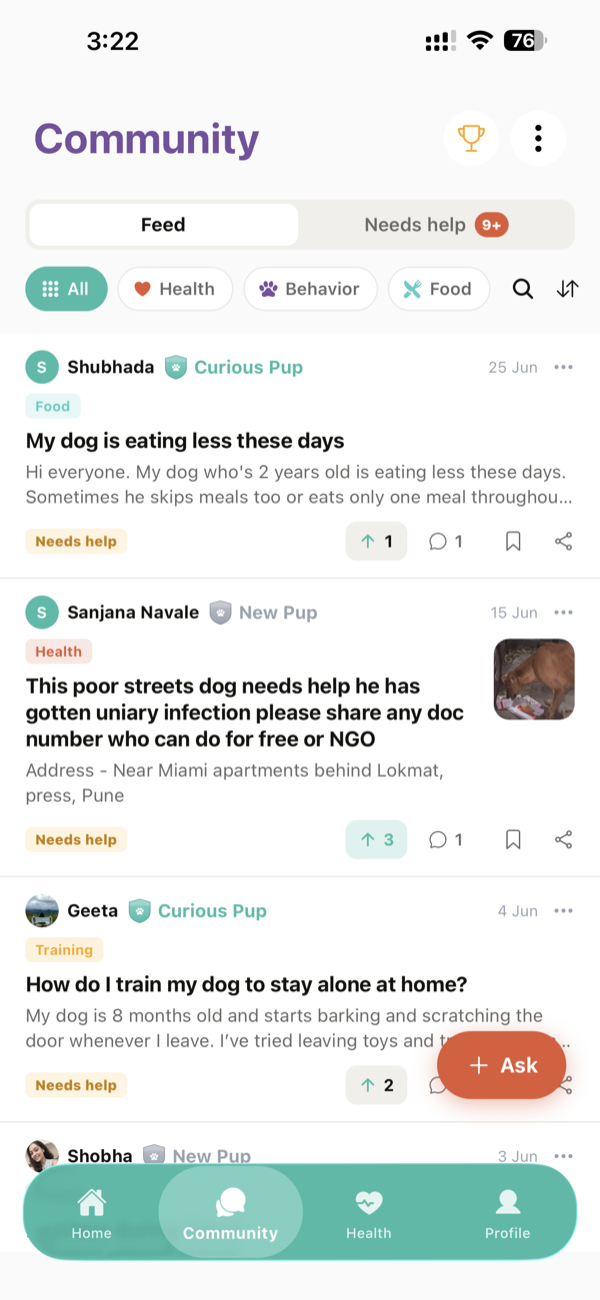
Categorized Q&A, upvotes, expert tags. Twitter-style cards optimized for thumb scrolling.
Schedule reminders, mark doses taken, catch missed doses. Vet-shareable health reports.
A floating pill lifted off the bottom edge, with a white indicator that slides between the four tabs. Switching feels physical, and the active tab is never in doubt.
One weekly video update, one shared notes page, no sprint reviews. The cadence behind the build.
I pushed back hard on scope creep. A four-feature app that ships beats a fourteen-feature app that never does.
Each week closed with a real build on a real phone, sent from my desk to the app stores' test channels in minutes. Feedback came in, changes went out. No sprint reviews, no design syncs: one weekly video walkthrough and a shared notes page.
Every architecture decision, product call and data model was mine, and I read every line before it shipped. Automated tests ran on every change, and crash monitoring watched the app from day one. That is the difference between AI-assisted engineering and letting AI take the wheel.
The handover: a maintained codebase, live app store listings, a deployed backend, and an admin dashboard that shows what's happening without a phone call.
This cadence is the standard, not a one-off. See how every build runs →
Six flows. Drag to scroll.
Same shipped product. Same testing rigor. Same code review bar. Roughly half the calendar, roughly a third of the cost.
Pricing is a range because scope decides it. We talk about your scope first, then I give you a fixed number. Not an hourly meter.
Push reliability, multi-dog handling, deregistration on logout, retry queues for flaky networks. The "interesting" features were one weekend. The notification system took weeks of careful work. If you're building anything with reminders or alerts, plan for it.
Every time I let the AI pick the data model without thinking hard about it first, I had to refactor later. The bottleneck is product clarity, not code generation.
Building alone with AI felt productive but flat. Without users tugging on the rope, the work loses urgency. The next build, I'd put real users in front of it in week 2, not week 10.
Send a paragraph about what you're trying to build. I'll reply within 24 hours either way. If it's a fit, we book a call. If it isn't, I'll tell you who to talk to instead.
Book a discovery call →